
Fall Bass Fishing Tips: How to Catch Bass From September to November
Autumn bass are easier to catch than at any other time of year — if you stop fishing summer spots. Here is the month-by-month plan.
By Alain Quiroga · August 28, 2026 · 6 min read
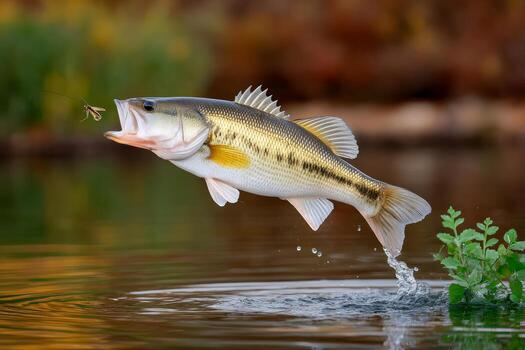
Fall bass fishing rewards anglers who abandon their summer waypoints. Between September and November, largemouth and smallmouth stop relating to deep offshore structure and start chasing baitfish into creek arms, over shallow flats, and along wind-blown banks. The bite can be the most aggressive of the year, but it moves daily, and the water temperature — not the calendar — tells you where to be. This guide breaks autumn into the three distinct phases most anglers blur together, with the temperatures, depths and lure choices that match each one.
Reference data
Fall bass fishing by the numbers
Autumn bass location is driven by surface temperature and bait. These are the working numbers I use from September through late November.
| Factor | Number to use | Why it matters |
|---|---|---|
| Transition trigger | Surface temp drops below 78°F | Usually after 3–4 nights 15–20°F cooler than the daytime high |
| Peak feeding window | 58–68°F | The most aggressive two weeks of the year on most reservoirs |
| Typical depth | 2–10 ft | Creek arms and pockets, not summer offshore structure |
| Turnover | Surface temp mid-60s, lasts 1–2 weeks | Foam lines and musty smell — move up creeks or to tailwaters |
| Best wind | 6–12 mph into the bank | Windy banks hold several times more feeding fish |
| Jerkbait pause | 8–15 seconds below 55°F | Count it out loud; most anglers pause far too briefly |
| Core lures | 1/2 oz lipless, 2.5 squarebill, 3/8 oz chatterbait, 3/8 oz football jig | Chrome, white and sexy shad patterns |
| Line | 12–15 lb fluorocarbon / 30–50 lb braid | Fluoro for jerkbaits and jigs, braid for grass |
September: The First Cool Nights and the Shad Push
The early-fall transition begins when night air temperatures drop 15 to 20 degrees below the daytime high for several days in a row. Surface temperature falls from the mid-80s into the upper 70s, and threadfin shad leave the main-lake basin for the backs of primary creeks. Bass do not immediately follow all the way in; they set up on the first and second points inside the creek mouth, where they can intercept bait moving past. Focus your first two hours of daylight on those points before the sun pushes fish tight to cover.
September fish are still fast, so cover water. A 1/2-ounce spinnerbait with double willow blades, a squarebill crankbait bounced off laydowns, and a walking topwater over flats in the 4-to-8-foot range all produce. If you get short strikes, it usually means your bait is larger than the forage: drop to a 2.5-inch squarebill or a 3.8-inch swimbait rather than changing color. The single most common September mistake is fishing the deep summer brush piles for one more week because they produced in August.
October: Turnover, Creek Arms and the Best Two Weeks of the Year
When surface temperature falls into the 60s, most northern and mid-latitude reservoirs turn over: cooling surface water sinks, mixes the column, and briefly scatters fish. You can see it — foam lines, a musty smell, and suspended debris. Turnover is temporary and rarely hits the whole lake at once. Creek arms, tailwaters and rivers stabilize first, so when the main lake goes flat, move up a creek until the water clears and the bite resumes.
Once the water settles between 58 and 65 degrees, the year's best two weeks arrive. Bass push bait against the back thirds of creeks and into pockets shallow enough that you can see the wakes. A lipless crankbait ripped through dying grass, a 3/8-ounce chatterbait on a straight retrieve, and a jerkbait on steeper banks cover every scenario. Target wind: a bank with a 6-to-12 mph wind blowing directly into it will hold several times more feeding fish than the slick side of the same creek.
November: Slowing Down Without Going Deep
By November, water in most of the country sits between 48 and 57 degrees. Bass are still shallow — a common misconception is that they head to the deepest hole as soon as it cools — but they stop chasing. The strike window shrinks, and the same lure that got crushed in October now needs a longer pause. Suspending jerkbaits come into their own here: three twitches, then a pause of 8 to 15 seconds. Count the pause out loud, because most anglers pause for two seconds and believe it was ten.
For non-chasing fish, a 3/8-ounce football jig with a compact craw trailer dragged across 45-degree chunk-rock banks is the highest-percentage late-fall presentation in clear water. In stained water, slow-roll a 1/2-ounce spinnerbait with a single Colorado blade just fast enough to feel the thump. Bites in November are often a mushy weight rather than a thump — if your line feels heavy, set the hook.
Reading Bait and Birds Instead of Guessing
Autumn location is a forage problem, not a bass problem. Gulls and terns diving over a pocket mean shad are pinned near the surface, and predators are almost always underneath. Loons working an area point to bait deeper in the column. Even without birds, watch for surface flickers at first light, slicks of oil on calm water where bass have crushed shad, and nervous water that moves against the ripple direction.
On electronics, ignore individual arches and look for bait clouds. A cloud between 6 and 15 feet over a 20-foot creek channel is the classic autumn setup: the bass hold below and to the shaded side of the ball. If you idle a creek and mark no bait in the first half mile, leave. Empty water in fall stays empty for days; it is not worth fishing out of hope.
Smallmouth and River Fish in Autumn
River smallmouth follow a different script. As flows cool below 55 degrees, they leave the fast riffles they held in all summer and stack in deeper wintering holes, usually the first slow, 8-to-15-foot pool downstream of a long riffle. A hair jig or a Ned rig crawled through that pool will often produce five or six fish from a stretch the size of a living room, then nothing for a quarter mile.
On northern natural lakes, smallmouth group on isolated rock humps topping out around 15 to 25 feet. Drop-shot with a 4-inch minnow-profile bait, or use a blade bait lifted 12 inches and allowed to fall on slack line. Late-autumn smallmouth are famous for hitting on the drop, so watch your line rather than waiting to feel the strike.
Field-tested · Insider knowledge
Insider tips most anglers overlook
Hard-won, specific tactics from years on the water — the kind of details that rarely make it into mainstream guides.
- 1
Check the back of every creek for a 2–3°F warmer reading than the main lake in September — that small gradient is where the shad stack first.
- 2
After turnover starts, run up-lake until the water loses its foam lines; the upper third of a reservoir stabilizes days before the main basin.
- 3
In October, fish the shaded side of a bait ball rather than casting into the middle — bass position under and behind the school, not inside it.
- 4
Swap your lipless crankbait's stock trebles for one size larger round-bend hooks; autumn bass slap baits and short-strike more than at any other season.
- 5
On sunny November days, skip dawn entirely and fish 11 a.m. to 3 p.m. on north-facing rock banks that have absorbed sun all morning.
- 6
If gulls are sitting on the water instead of diving, the bait has gone deep — switch to a blade bait or a jigging spoon before you leave the area.
- 7
Keep a spinning rod with a 3-inch shad-colored swimbait rigged as a follow-up cast; a fish that boils on a moving bait will almost always eat the smaller profile.
Frequently asked questions
What water temperature is best for fall bass fishing?
The most aggressive fall bass feeding happens between 58 and 68 degrees Fahrenheit. Above 70 degrees, fish still behave like late-summer bass and hold deeper. Below 50 degrees they remain catchable but need much slower presentations, with long pauses on jerkbaits and dragged jigs rather than moving baits.
Should I fish shallow or deep for bass in the fall?
Shallow, in most cases. From September through November, the majority of bass on reservoirs follow shad into creek arms and hold in 2 to 10 feet of water. Deep offshore structure produces far better in midsummer. Late November is the point where a portion of the population starts sliding back toward channel swings and steeper banks.
How do I fish a lake during turnover?
Leave the main lake. During turnover the mixed water is temporarily low in oxygen and bass scatter. Creek arms, river sections above the reservoir, and tailwaters below dams stabilize days earlier, so run up a creek until the water looks clean and fish there. Turnover typically lasts one to two weeks on any given part of a lake.
What are the best fall bass lures?
Four lures cover almost all autumn conditions: a lipless crankbait for grass and flats, a squarebill for wood and rock, a chatterbait for stained water, and a suspending jerkbait for clear water below 60 degrees. Shad patterns — chrome, white, and sexy shad — outperform darker colors because bass are feeding almost exclusively on baitfish.
Is morning or evening better for fall bass?
Early morning is best in September, when warm afternoons still push fish off. By late October and November, the pattern flips: the warmest part of the day, usually 11 a.m. to 3 p.m., produces the most bites because a couple of degrees of warming on a sunny bank measurably raises bass activity.
About the author
Alain Quiroga
Founder & Lead Angler, BizkFish
Austin, Texas · Frequently on the road across the U.S. · 17+ years fishing
Alain has been fishing seriously for 17 years, starting as a kid on farm ponds in East Texas and eventually guiding friends and family across more than 200 fisheries in 24 U.S. states. He splits his season between largemouth on Central Texas reservoirs, trout on Rocky Mountain tailwaters, and inshore saltwater along the Gulf and Southeast Atlantic. Every article on BizkFish is written from firsthand time on the water — not rewritten from other blogs.
Field notes: Built on autumn seasons spent on Table Rock (MO), Guntersville (AL) and East Texas reservoirs between 2022 and 2025, logging surface temperatures and creek-by-creek bait movement on every trip.
Credentials
- 17+ years targeting freshwater and inshore saltwater species
- TPWD Boater Education certified (Texas Parks & Wildlife)
- American Red Cross CPR/First Aid certified — required for on-water group trips
- Volunteer with a local Trout Unlimited chapter (stream cleanups and youth clinics)
- Logged 180+ fishing days across the 2023–2024 seasons
Home waters
- Lake Travis & Lake Austin, TX (year-round largemouth and white bass)
- Guadalupe River tailwater, TX (winter rainbow trout)
- Port Aransas & Matagorda Bay, TX (redfish, speckled trout)
- San Juan River, NM (technical dry-fly trout)
Species regularly targeted
- Largemouth & smallmouth bass
- Rainbow, brown, and cutthroat trout
- Redfish, speckled trout, snook, flounder
- Channel & blue catfish
- Crappie, bluegill, and other panfish
Notable trips
- 3-week Alaska trip (Kenai Peninsula + Bristol Bay lodges) chasing king salmon and rainbow trout, summer 2023
- Two seasons floating the Madison and Yellowstone rivers in Montana with a licensed outfitter
- 10-day Florida Keys skinny-water trip targeting tarpon, bonefish, and permit out of Islamorada
- Multiple Ozark float trips on the White and Buffalo rivers (AR/MO) for smallmouth
- Annual Louisiana marsh trip out of Venice for bull redfish
Related articles

The Best Bass Fishing Lakes in Texas for Trophy Catches
From legendary Lake Fork to underrated Falcon, here are the Texas waters where double-digit largemouth happen every spring.
Alain Quiroga · Apr 12, 2026 · 5 min read

The Ultimate Guide to Bass Fishing Lures
Every successful bass angler relies on the same eight lure categories. Here's how to fish each one correctly.
Alain Quiroga · Jan 12, 2026 · 6 min read