
How to Catch Walleye From Shore: Spots, Timing and Rigs That Work Without a Boat
Walleye are reachable from the bank far more often than boat anglers admit — if you fish the right hundred yards at the right hour.
By Alain Quiroga · September 5, 2026 · 7 min read
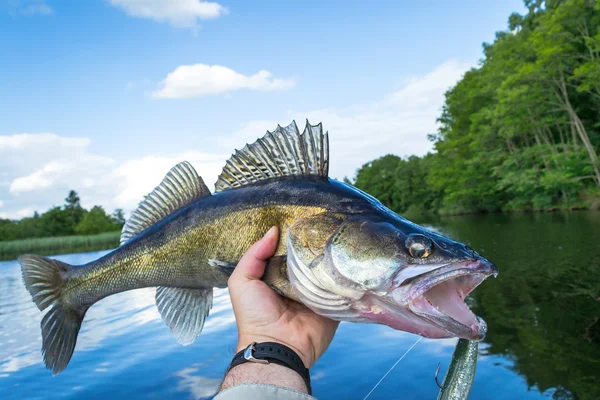
Most walleye content assumes a boat, a bow-mount trolling motor and a screen full of sonar. That leaves out the large number of anglers in Minnesota, the Dakotas, Ohio, Michigan and the Great Lakes states who fish from shore and still want an eight-pound fish. The good news is that walleye spend a meaningful part of the year within casting distance of land: during the spring run, all through the fall bait migration, and nearly every night from May to October when they push into shallow rock to feed. Success from shore is not about covering water; it is about standing in the right hundred yards at the right hour with a rig that works in current.
Reference data
Shore walleye by the numbers
Weights, leaders and timing windows for catching walleye from the bank without a boat.
| Factor | Number to use | Why it matters |
|---|---|---|
| Prime night window | Sunset +30 min to ~1 a.m. | Clear lakes; stained rivers fish well in daylight too |
| Spring run temp | 42–48°F | Below dams and at river mouths — check seasonal closures first |
| Fall shallow bite | 3–8 ft on rock and gravel | October–November, best with wind blowing in |
| Jig weight | 1/4–3/8 oz | Enough to hold bottom on a long cast; drop a size if you keep snagging |
| Plastic / bait size | 4 in paddle tail or live minnow | Match the shiner and shad size in your water |
| Slip-sinker rig | 3/8 oz walking sinker, 36–48 in leader | Size 4 octopus hook and a nightcrawler, fished stationary at night |
| Rod | 7 ft medium-light spinning, fast tip | Distance plus enough tip to feel a jig tick rock |
| Line | 10 lb braid + 6–8 ft of 8–10 lb fluorocarbon | Braid transmits the soft take on the fall |
| Bank depth to look for | 10+ ft within 60 ft of shore | Shallow flats only produce during the run or after dark |
| Headlamp | Red or green only | White light on shallow clear water pushes fish off for 20+ minutes |
The Five Shoreline Spots That Consistently Hold Walleye
Dam tailraces come first. Below any lowhead or hydro dam, current concentrates baitfish and walleye hold in the seam between fast water and slack water, usually within thirty feet of the bank. Fish the downstream edge of the boil, not the boil itself. Second, river mouths where a tributary enters a lake: these pull walleye in during spring and after every heavy rain that pushes stained water and food into the lake.
Third, riprap causeways and breakwalls, which hold crayfish and warm faster than surrounding water in spring. Fourth, points that drop into ten feet or more within a cast, where fish move up at night. Fifth, wind-blown gravel shorelines in fall, where a two-foot chop grinds up bait and turns a featureless bank into a feeding lane. If a shoreline has none of those five features, it is unlikely to produce reliably no matter how long you stand there.
Timing: Night and the Shoulder Seasons Beat Everything
Walleye have a reflective tapetum lucidum in their eyes that gives them a significant vision advantage in low light, which is why shore fishing gets dramatically better after dark. From late May through October, the window from thirty minutes after sunset to about 1 a.m. produces the majority of bank-caught walleye on clear lakes. On stained rivers, the advantage is smaller and daytime fishing can be productive all season.
Seasonally, target two peaks. The spring run happens when water passes 42 to 48 degrees and fish stage below dams and at river mouths to spawn; many states close or restrict these areas at that time, so check regulations before you go. The second peak is October and November, when walleye follow shad and shiners into shallow rock and can be caught from shore in three to eight feet of water, often in the middle of the afternoon when a hard wind is blowing in.
Rigs That Work From the Bank
Start with a 1/4- to 3/8-ounce jig head and a four-inch soft plastic paddle tail or a live minnow. From shore you need enough weight to maintain bottom contact on a long cast in current, but not so much that the jig plows. Cast upstream at a 45-degree angle, let it swing, and lift-drop it every few feet. If you snag repeatedly, drop one weight class rather than lifting higher.
For a slower presentation, use a lindy-style slip sinker rig: a 3/8-ounce walking sinker, a bead, a swivel, then a 36- to 48-inch fluorocarbon leader to a size 4 octopus hook with a nightcrawler. Cast it out, prop the rod up and leave it — this is the most effective way to fish a rocky point at night. For casting hard baits, a suspending jerkbait or a shallow-diving minnow bait in the 4- to 5-inch range retrieved painfully slowly over rock in three to six feet is the classic after-dark shoreline lure.
Line, Rods and the Details That Matter After Dark
A 7-foot medium-light spinning rod with a fast tip gives you casting distance and enough sensitivity to feel a jig ticking rock. Spool 10-pound braid with a 10-pound fluorocarbon leader of six to eight feet; braid transmits the light tap of a walleye taking a jig on the fall, which monofilament dampens into nothing. In extremely clear water, drop the leader to 8-pound.
At night, organize before dark. Lay out your rigs, pre-tie two leaders, and use a red or green headlamp rather than white. White light on the water in shallow, clear conditions will push fish off a rocky shoreline for twenty minutes or more. Keep your landing net within reach; the most common way shore anglers lose a big walleye is trying to drag it up a riprap bank.
How to Find New Bank Access
Use a satellite map and look for three things: a dam, a bridge, or a public boat ramp with a shoreline you can walk. Ramps are underrated because the access road usually parallels deep water and the parking is legal and lit. State DNR websites list fishing piers and shore-access sites, and many stock walleye specifically where bank anglers can reach them.
Then check depth. A contour map showing ten feet or more within sixty feet of the bank is what you want; shorelines that stay two feet deep for two hundred yards will only produce during the spring run or after full dark. Once you find a bank that meets those criteria, fish it four or five times across different conditions before writing it off. Shore fishing rewards depth of knowledge about few spots, not breadth.
Field-tested · Insider knowledge
Insider tips most anglers overlook
Hard-won, specific tactics from years on the water — the kind of details that rarely make it into mainstream guides.
- 1
Fish the downstream seam of a dam boil, not the boil itself — walleye sit in the slack edge and let the current deliver bait to them.
- 2
Public boat ramps are the most underrated shore access in the country: the approach channel is usually the deepest water within walking distance and parking is legal and lit.
- 3
Pre-tie two leaders and lay out your rigs before dark; re-rigging with a white headlamp on shallow clear water costs you the next twenty minutes of fishing.
- 4
After heavy rain, go straight to the nearest tributary mouth — the mud line where stained water meets clear is a walleye feeding lane for 24 to 48 hours.
- 5
On riprap, retrieve slowly enough that you feel every third rock; a walleye take on rock is often just a loss of tension, not a thump.
- 6
If a spot produced once, fish it four or five more times across different wind and light conditions before writing it off; shore fishing rewards depth over breadth.
- 7
Carry the net down to the water before you hook up — more big shore walleye are lost being dragged up a rock bank than on the hookset.
Frequently asked questions
Can you really catch walleye from shore?
Yes, consistently. Walleye move within casting distance during the spring spawning run, all through the fall baitfish migration, and on most summer nights when they feed on shallow rock. Dam tailraces, river mouths, riprap causeways and wind-blown gravel banks are the highest-percentage shore locations in the Great Lakes and upper Midwest states.
What is the best bait for walleye from shore?
A 1/4- to 3/8-ounce jig tipped with a live minnow or a four-inch paddle-tail plastic covers most situations. For a stationary approach on rocky points at night, a slip-sinker rig with a 36- to 48-inch fluorocarbon leader and a nightcrawler on a size 4 octopus hook is hard to beat.
What time of night is best for shore walleye?
From thirty minutes after sunset to roughly 1 a.m. is the core window on clear lakes, with the first two hours after dark usually the most productive. On stained rivers, walleye feed more freely in daylight, so the night advantage is smaller and afternoon fishing can be good.
What line should I use for shore fishing walleye?
Ten-pound braid with a six- to eight-foot fluorocarbon leader in 8 to 10 pounds. Braid gives casting distance and transmits the soft tap of a walleye eating a jig on the fall; fluorocarbon keeps the presentation subtle in clear water and resists abrasion on riprap and rock.
How deep should I fish for walleye from the bank?
Look for banks where the bottom reaches ten feet or more within a comfortable cast. During the day, fish that deeper water and any current seam. After dark and during the fall migration, walleye push up into three to eight feet on rock and gravel, so shorten your casts rather than launching them as far as possible.
About the author
Alain Quiroga
Founder & Lead Angler, BizkFish
Austin, Texas · Frequently on the road across the U.S. · 17+ years fishing
Alain has been fishing seriously for 17 years, starting as a kid on farm ponds in East Texas and eventually guiding friends and family across more than 200 fisheries in 24 U.S. states. He splits his season between largemouth on Central Texas reservoirs, trout on Rocky Mountain tailwaters, and inshore saltwater along the Gulf and Southeast Atlantic. Every article on BizkFish is written from firsthand time on the water — not rewritten from other blogs.
Field notes: Drawn from bank sessions below Missouri River dams in South Dakota, on Lake Erie breakwalls near Cleveland, and on Minnesota river mouths — most of them fished on foot after dark between 2021 and 2025.
Credentials
- 17+ years targeting freshwater and inshore saltwater species
- TPWD Boater Education certified (Texas Parks & Wildlife)
- American Red Cross CPR/First Aid certified — required for on-water group trips
- Volunteer with a local Trout Unlimited chapter (stream cleanups and youth clinics)
- Logged 180+ fishing days across the 2023–2024 seasons
Home waters
- Lake Travis & Lake Austin, TX (year-round largemouth and white bass)
- Guadalupe River tailwater, TX (winter rainbow trout)
- Port Aransas & Matagorda Bay, TX (redfish, speckled trout)
- San Juan River, NM (technical dry-fly trout)
Species regularly targeted
- Largemouth & smallmouth bass
- Rainbow, brown, and cutthroat trout
- Redfish, speckled trout, snook, flounder
- Channel & blue catfish
- Crappie, bluegill, and other panfish
Notable trips
- 3-week Alaska trip (Kenai Peninsula + Bristol Bay lodges) chasing king salmon and rainbow trout, summer 2023
- Two seasons floating the Madison and Yellowstone rivers in Montana with a licensed outfitter
- 10-day Florida Keys skinny-water trip targeting tarpon, bonefish, and permit out of Islamorada
- Multiple Ozark float trips on the White and Buffalo rivers (AR/MO) for smallmouth
- Annual Louisiana marsh trip out of Venice for bull redfish
Related articles

Best Catfish Rivers in America
These five rivers consistently produce trophy blue and flathead catfish, including state and world records.
Alain Quiroga · Jan 26, 2026 · 5 min read

How to Catch Crappie Throughout the Year
Crappie are pattern fish. Master four seasonal patterns and you'll catch them every month of the year.
Alain Quiroga · Nov 30, 2025 · 6 min read